Carbon Markets Readiness in Pakistan: Addressing Governance Gaps and Safeguarding Against Integrity Risks Carbon Markets Readiness in Pakistan: Addressing Governance Gaps and Safeguarding Against Integrity Risks
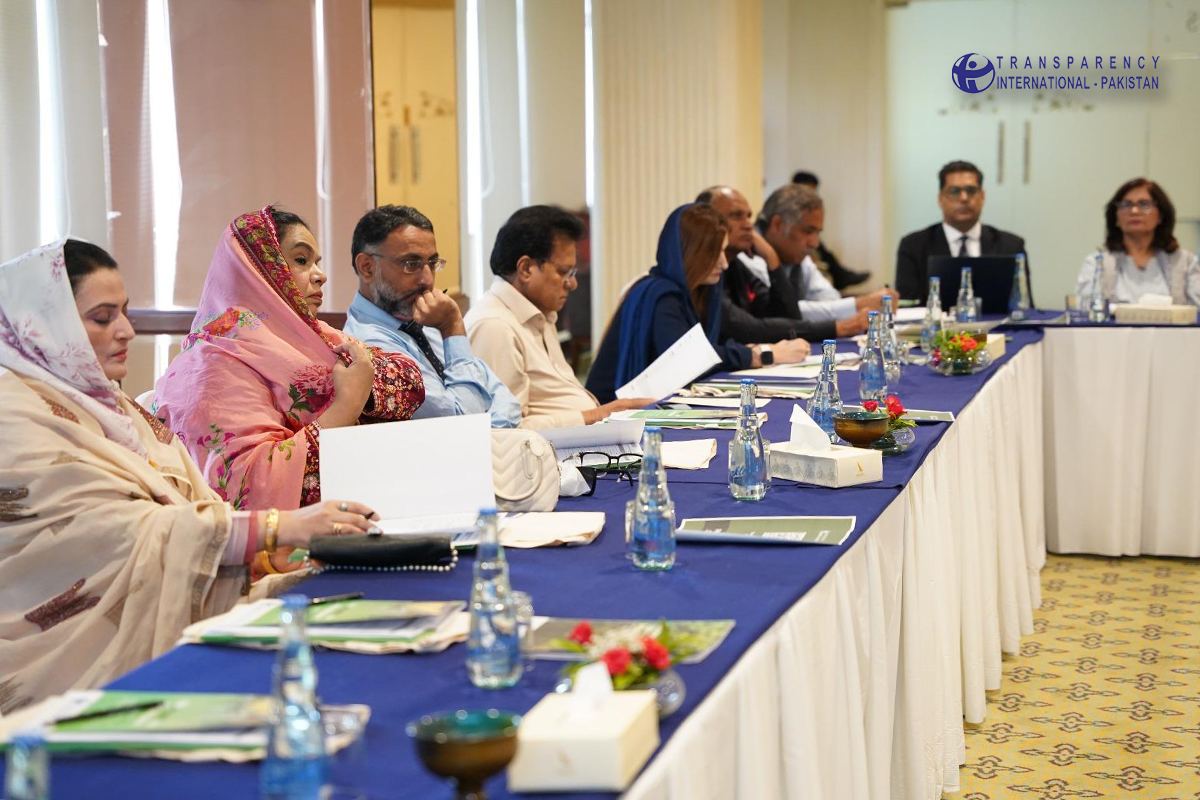
Participants at the launch of the Carbon Markets Readiness report, Islamabad

Research

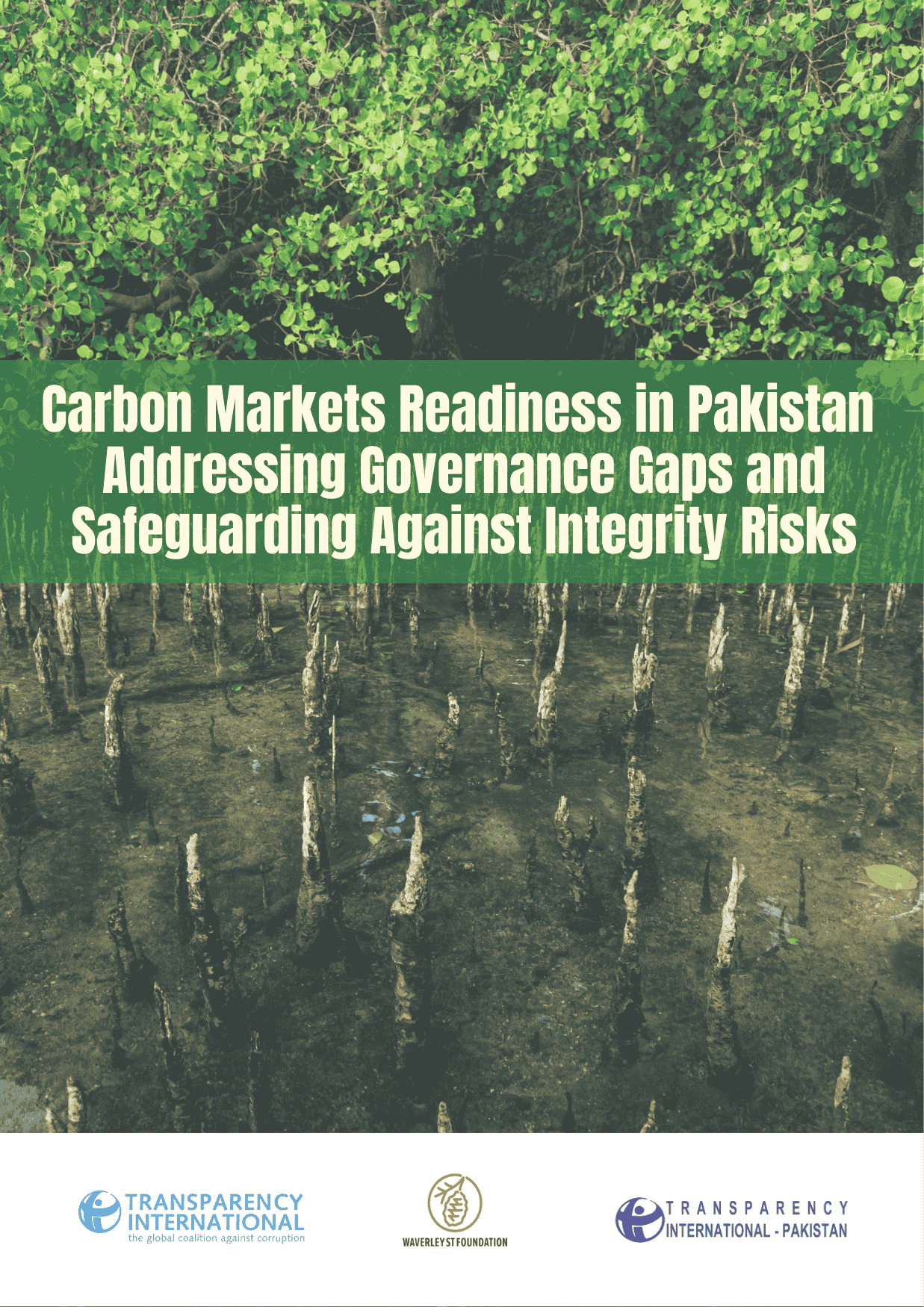
Carbon Markets Readiness in Pakistan

Where the governance gaps sit, how they create integrity risks, and what safeguards Pakistan needs before carbon trading scales.

Read the report
Parliamentarians at a consultative meeting on carbon markets governance, Islamabad

Advocacy

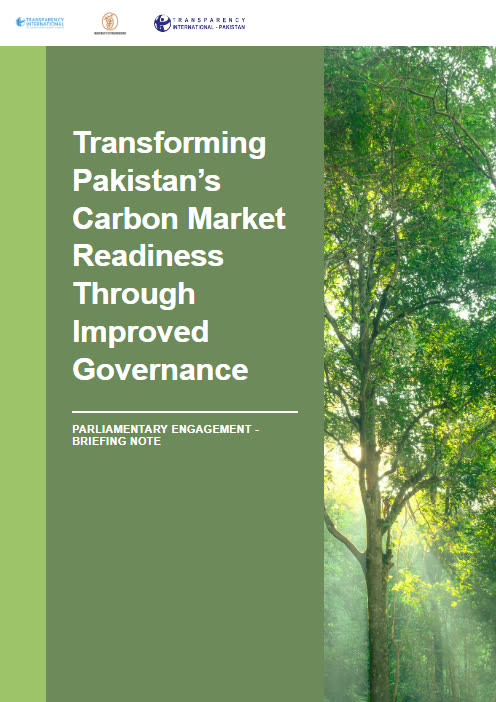
Legislative Roadmap for Parliamentarians: Strengthening Carbon Markets Governance

Submissions on inclusion, integrity, benefit sharing, and public oversight as provincial climate law takes shape.

Read the submission
Participants of the ESG Decoded bootcamp at TI Pakistan

Learning

ESG Decoded Bootcamp

The training series building capacity on ESG materiality and prioritisation, Pakistan's evolving regulatory and disclosure landscape, and how organisations can assign ownership, actions, targets, and measurable KPIs on ESG.

See the series

Climate Governance

Making climate action in Pakistan more transparent, accountable, and inclusive.

Climate change is not only an environmental challenge, it is also a governance challenge. Decisions on climate finance, adaptation, carbon markets, public investment, and environmental regulation shape how resources are used, whose priorities are reflected, and how climate action is held accountable.

Transparency International Pakistan works to strengthen the governance systems around climate action. We bring transparency, integrity, public oversight, access to information, participation, and community safeguards into climate policy, finance, institutions, and implementation. Our work spans the systems that determine how climate decisions are made, financed, delivered, and scrutinised.

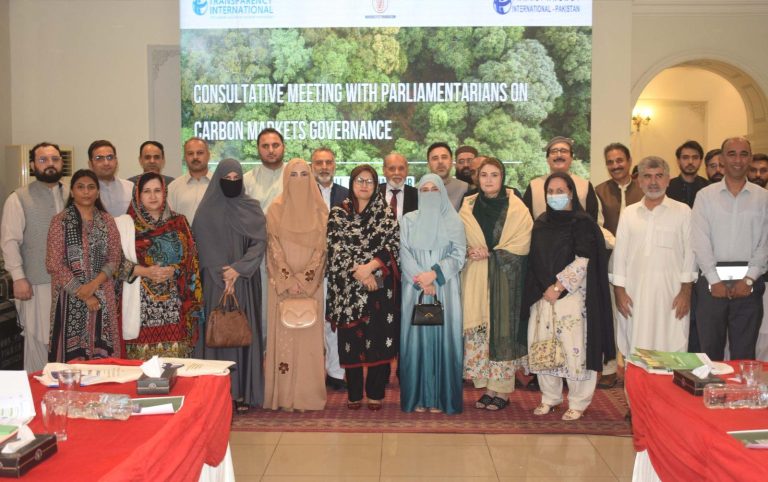
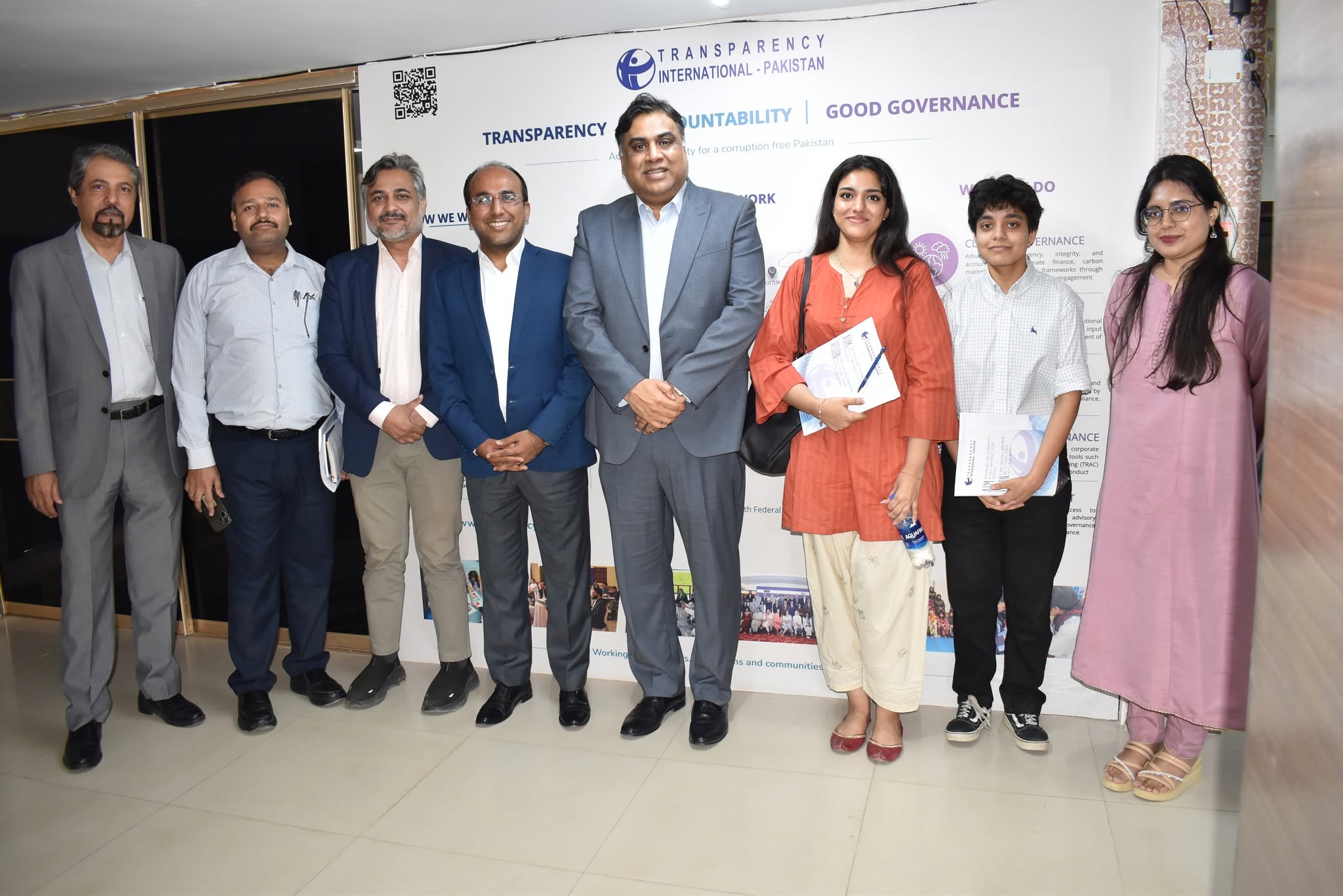
Parliamentarians and stakeholders at TI Pakistan's consultative meeting on carbon markets governance, Lahore

Consultative meeting with parliamentarians on carbon markets governance, Avari Hotel, Lahore, July 2026.

5th

Pakistan is rated the fifth most vulnerable country to the impacts of climate change, and among the least equipped to respond.

$565.7 Billion

Amount Pakistan needs in climate finance as per the updated national climate targets (NDC 3.0).

$400M – $2.25B

Amount Pakistan's emerging carbon market could mobilise, depending on participation, credit generation, and international demand.

Figures as cited by reports under TI Pakistan's Climate Governance Integrity Programme.

How we work

Four connected areas of work

TI Pakistan works across four connected areas to strengthen integrity throughout the climate-governance system.

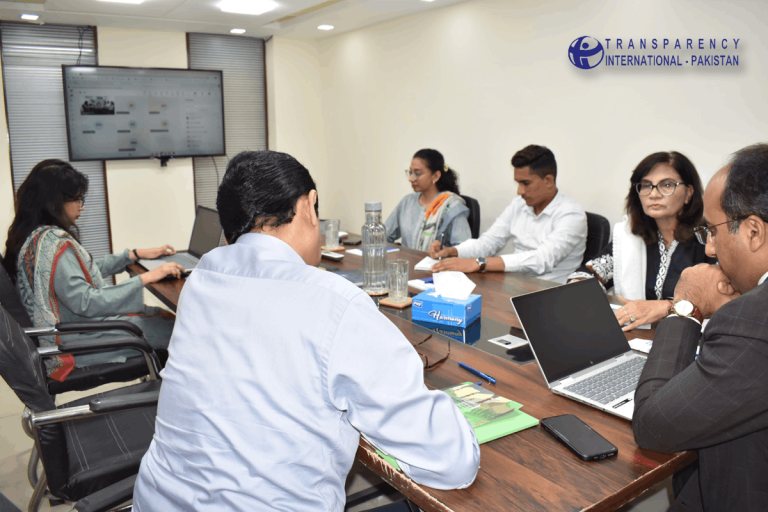
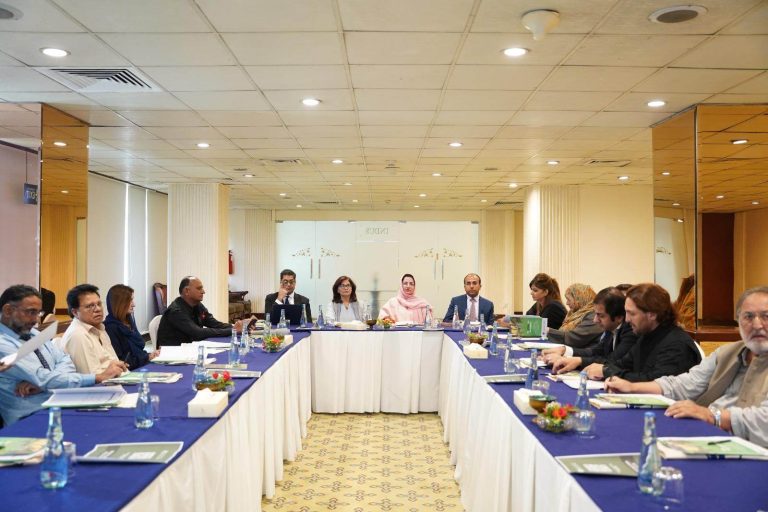
Parliamentary consultative meeting on carbon markets governance, Islamabad

Policy & Advocacy

We engage policymakers, parliamentarians, government departments, civil society, and technical experts to bring integrity safeguards into climate policy, legislation, and emerging systems such as carbon markets. Our advocacy focuses on clearer rules, public disclosure, oversight, participation, grievance mechanisms, and equitable outcomes.

Hover to read more Policy submissions and recommendations
Dissemination event for the Carbon Markets Readiness report, Islamabad

Research & Evidence

Our policy work is grounded in research on where climate-governance systems are weak, how those gaps create integrity risks, and what reforms can strengthen implementation. Our work covers climate finance and budgeting, access to climate information, public disclosure, carbon-market readiness, benefit sharing, and community safeguards.

Hover to read more Research and reports
Government officers at a training on climate-sensitive budgeting and climate finance transparency, Quetta

Institutional Engagement & Capacity Building

We work directly with federal and provincial departments, legislatures, regulators, universities, and other public and technical institutions. Through training and technical engagement, TI Pakistan brings governance and accountability expertise into climate decision-making and helps institutions examine practical gaps in institutional readiness for accessing climate finance, building bankable projects, ensuring robust integrity safeguards and benefit-sharing mechanisms in carbon-market projects, and making public investment decisions climate sensitive.

Hover to read more Government training and learning resources
Community members at the public hearing on community-driven climate action, District Thatta, Sindh

Community, Youth Engagement and Journalist Fellowships

Climate governance must also be understandable and accessible outside government. We work with communities, young people, journalists, universities, and civil society through fellowships, public hearings, field engagement, and learning initiatives, helping more people understand climate governance, access information, participate in climate discussions, and ask who decides, who benefits, and who is accountable.

Hover to read more

What we focus on

Six areas where governance decides the outcome

Carbon Market Integrity

Clear rules, reliable data and MRV, disclosure of project information, equitable benefit sharing, grievance mechanisms, and community safeguards.

Climate Finance Transparency

Greater visibility and traceability of climate-related funding, budgeting, allocation, and spending.

Access to Climate Information

Better public access to climate policies, budgets, projects, environmental data, procurement, financing, and institutional responsibilities.

Climate-Sensitive Public Finance

Stronger planning, budgeting, procurement, monitoring, and accountability for climate-related public spending and investment.

Inclusive Climate Decision-Making

Meaningful participation by communities, young people, civil society, journalists, experts, and affected groups.

Integrity Safeguards

Public disclosure, procurement compliance, conflict-of-interest rules, complaints and grievance systems, oversight, and independent accountability.

Recent engagements

Where this work is happening

Participants at the consultative meeting with parliamentarians on carbon markets governance, Avari Hotel, Lahore

Lahore

Consultative Meeting with Parliamentarians on Carbon Markets Governance

14 July 2026 · Avari Hotel

Read more
Participants at the launch of Carbon Markets Readiness in Pakistan, Margalla Hotel, Islamabad

Islamabad

Launch of Carbon Markets Readiness in Pakistan: Addressing Governance Gaps and Safeguarding Against Integrity Risks

9 December 2025 · Margalla Hotel

Read more
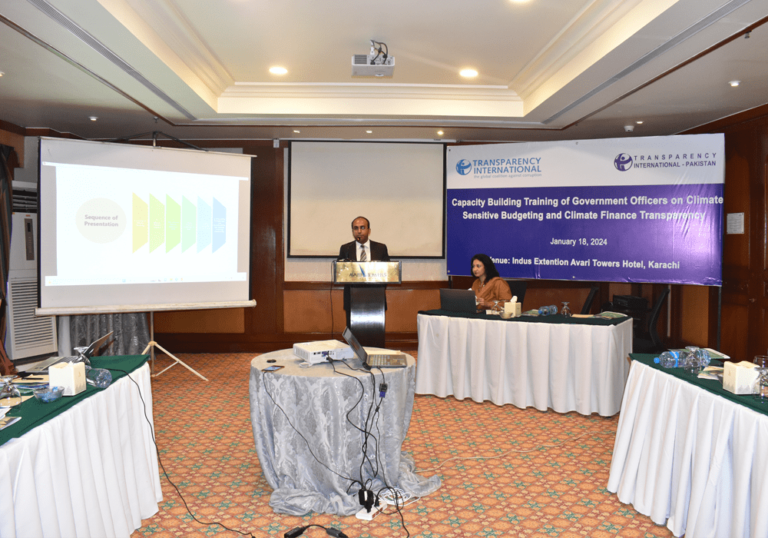
Government officers at the training on climate-sensitive budgeting and climate finance transparency, Avari Towers Hotel, Karachi

Karachi

Capacity Building of Government Officers on Climate-Sensitive Budgeting and Climate Finance Transparency

18 January 2024 · Avari Towers Hotel

Read more
Youth climate fellows at the graduation ceremony, Business Incubation Centre, University of Peshawar

Peshawar

Climate Governance Innovation Challenge 2024 and closing ceremony of the Youth Climate Education & Fellowship Programme

9 January 2025 · University of Peshawar

Read more
Participants at the consultative meeting with parliamentarians on carbon markets governance, Peshawar Club

Peshawar

Consultative Meeting with Parliamentarians on Carbon Markets Governance

23 July 2026 · Peshawar Club

Read more
Participants of the Carbon Markets Decoded bootcamp at TI Pakistan

Bootcamp series

Carbon Markets Decoded, the second training in the climate bootcamp series

6 July 2026

Read more
Training session at TI Pakistan's first climate finance bootcamp

Bootcamp series

Climate Finance Decoded, TI Pakistan's first climate finance bootcamp

15 June 2026

Read more
Participants at the consultative meeting with parliamentarians on carbon markets governance, DHA Golf Club, Karachi

Karachi

Consultative Meeting with Parliamentarians on Carbon Markets Governance

9 March 2026 · DHA Golf Club

Read more
Participants at the parliamentary consultative meeting on carbon markets governance in Pakistan, Islamabad

Islamabad

Parliamentary Consultative Meeting on Carbon Markets Governance in Pakistan

17 February 2026

Read more
Journalist fellows on an exposure visit to the mangroves at Keti Bunder, Sindh

Keti Bunder, Sindh

Journalist Fellowship on Climate Finance and Transparency: carbon markets and journalism

9 October 2025 · Exposure visit, Module 04

Read more
Community members at the public hearing on community-driven climate action, District Thatta, Sindh

Thatta, Sindh

Public Community Hearing on Community-Driven Climate Action

8 October 2025

Read more
Event imagePunjab institutional engagement.

Punjab

Institutional engagement on carbon-market implementation

Ongoing

Read more
Event imageClimate Week Karachi.

Karachi

Climate Week Karachi — Local climate finance

Session

Read more

Climate governance in action

Recommendations that shaped policy

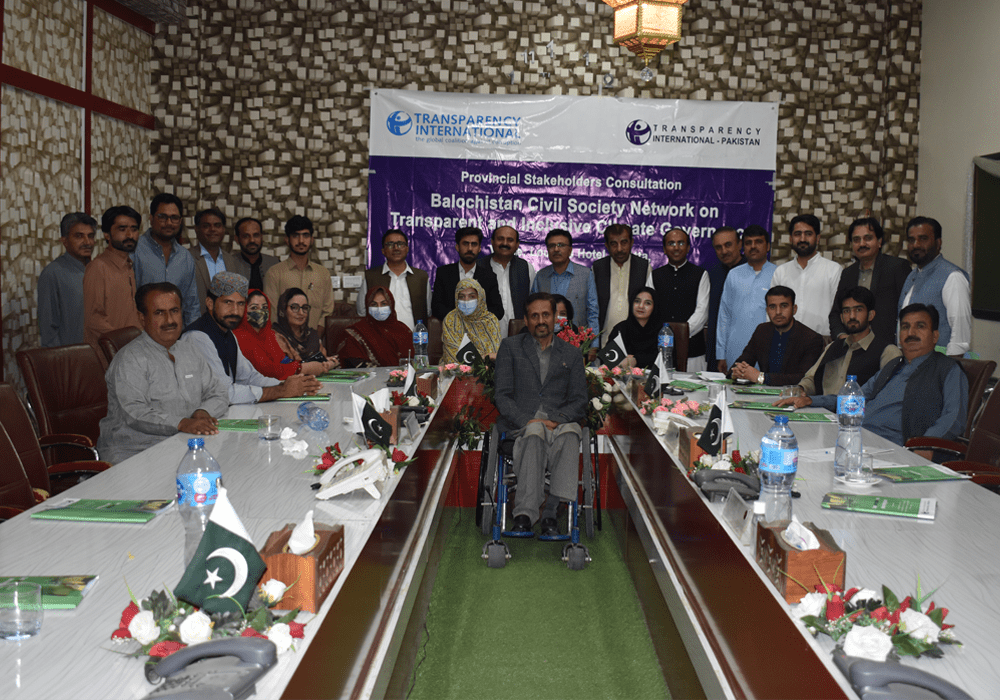
Provincial stakeholders consultation on transparent and inclusive climate governance, Quetta

Stakeholder consultation on provincial climate governance frameworks, Quetta, November 2023.

Provincial policy

Balochistan Climate Change Policy 2024

TI Pakistan worked with civil society and provincial stakeholders to develop recommendations for stronger transparency and inclusion in Balochistan's climate-governance framework. The final document reflected a number of these priorities, including public disclosure of climate information, compliance with public-procurement rules, grievance-redress arrangements, community participation and monitoring, and safeguards related to conflicts of interest.

Read the Balochistan Climate Change Policy 2024
Panel discussion on policy and institutional considerations for carbon market development in Pakistan

Panel discussion on policy and institutional considerations for carbon market development, Islamabad, December 2025.

National framework

Pakistan's first Policy Guidelines for Trading in Carbon Markets

TI Pakistan submitted recommendations aimed at strengthening transparency, accountability, environmental integrity, and equitable participation and benefit sharing as Pakistan developed its first carbon-market policy guidelines in 2024. The framework reflected integrity measures around transparent processes and safeguards. TI Pakistan has continued this work as the system moves from policy to implementation, focusing on legal clarity, MRV and data, benefit sharing, grievance mechanisms, community safeguards, and parliamentary oversight, including adoption of a Carbon Market Framework Act to give carbon markets strong legislative backing in the country.
See the integrity measures adopted in the guidelines

Ongoing advocacy

What we are shaping now

Current advocacy includes recommendations on the Punjab Climate Change Act 2026 and Punjab's Carbon Market Activities Rules, alongside continued work on a stronger statutory framework for carbon markets, equitable benefit sharing, public disclosure, credible MRV systems, grievance mechanisms, and public and parliamentary oversight.
Punjab Climate Change Act 2026 Carbon Market Activities Rules Statutory carbon-market framework Equitable benefit sharing Credible MRV Grievance mechanisms Parliamentary oversight

Our current programme

Climate Governance Integrity Programme

CGIP

Climate Governance Integrity Programme

Waverly Street Foundation Transparency International
Funded by
Waverly Street Foundation
Through
Transparency International
Implemented in Pakistan by
Transparency International Pakistan

A major part of TI Pakistan's climate-governance work is supported through the Climate Governance Integrity Programme (CGIP), funded by the Waverly Street Foundation through Transparency International.

In Pakistan, CGIP supports work across policy advocacy, climate-finance transparency, carbon-market integrity, research, institutional capacity building, public information, community engagement, and youth and journalist capacity building. The programme sits within TI Pakistan's broader climate-governance portfolio rather than defining the full scope of our work in this area.

The programme began as Strengthening Transparency and Integrity in Climate Governance, working with a wide range of groups and stakeholders so that climate action in Pakistan is inclusive and transparent.

The programme works towards four aims

  • Make climate action transparent and inclusive
  • Improve climate accountability
  • Safeguard climate funding
  • Protect communities against impunity
Programme documents and materials →

Research & resources

Publications, submissions, and frameworks

Grouped by type, most recent first. Linked documents open on transparency.org.pk.

View all climate governance resources →

Watch

Expert discussions on transparent and inclusive climate governance

Webinars, panels, and recorded sessions from TI Pakistan's climate governance work.

Carbon Markets at a Crossroads: Strengthening Transparency and Anti-Corruption Safeguards

Watch on YouTube

Panel discussion: Bridging the Gap, effective and transparent climate governance in Pakistan

Watch on YouTube

Climate finance and just energy transition: experiences from COP28 and potential for Pakistan

Watch on YouTube

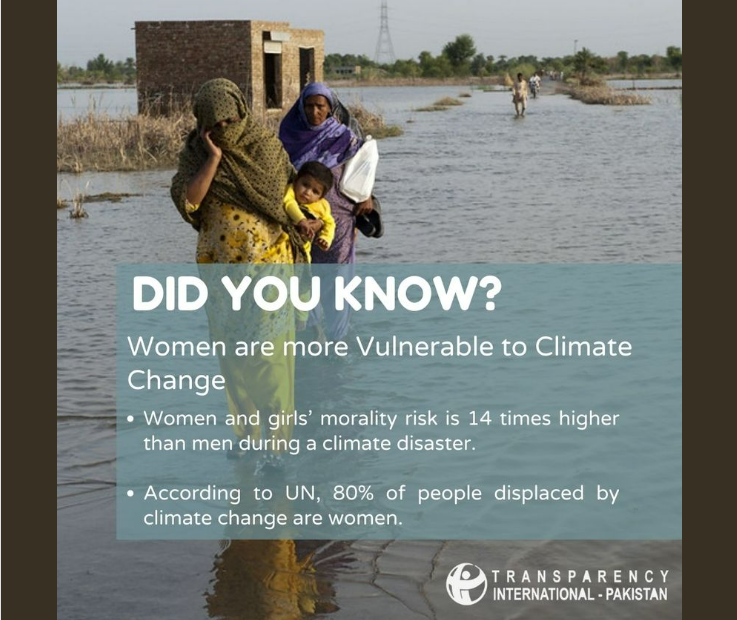
Gender inclusion in climate action: building inclusive, resilient communities

Watch on YouTube

Enhancing citizens’ participation in climate decision-making

Watch on YouTube

Capacity building workshop for officers of climate-relevant departments

Watch on YouTube

Climate Governance Innovation Challenge at the University of Peshawar

Watch on YouTube

Kashif Ali, Executive Director TI Pakistan, in the PTV documentary on climate change and COP28

Watch on YouTube

Public information

Explainers, brochures, and social media

Plain-language material produced for communities, students, and journalists. Click any panel to open it full size.

Guides and explainers

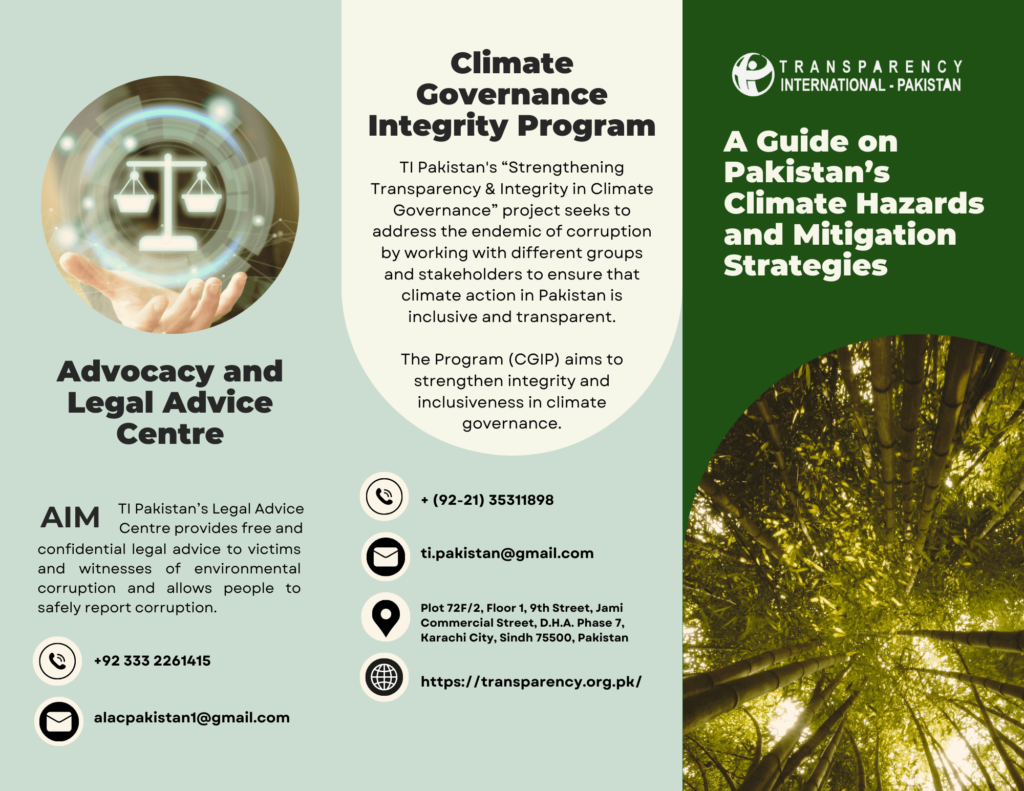
Front of the guide to Pakistan's climate hazards and mitigation strategies
A Guide on Pakistan’s Climate Hazards and Mitigation StrategiesEnglish brochure, outer pages.
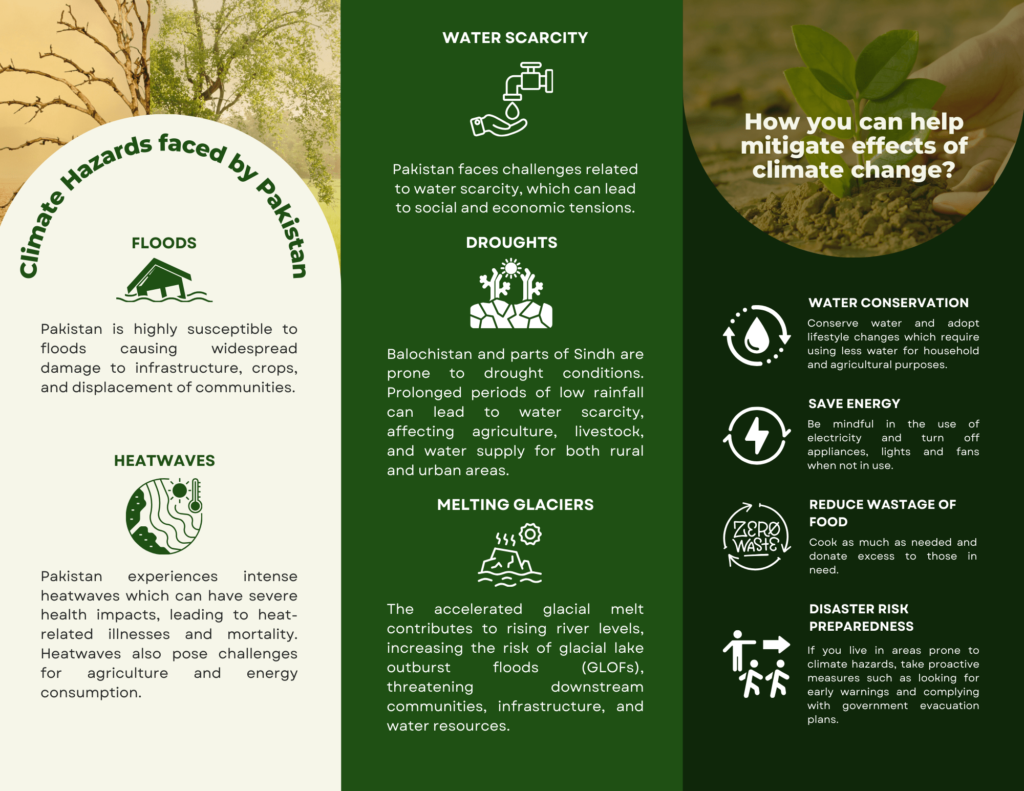
Inside pages of the climate hazards guide covering floods, droughts, heatwaves, and melting glaciers
Climate hazards faced by PakistanInner pages: floods, droughts, heatwaves, melting glaciers, and how to mitigate them.
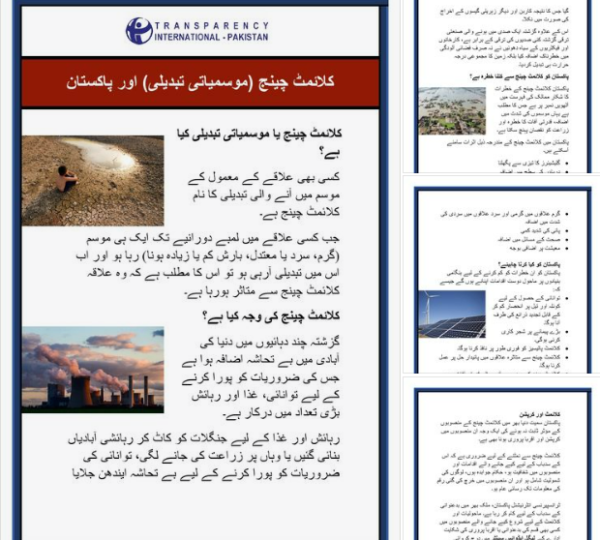
Urdu edition of the climate hazards guide, outer pages
Climate hazards guide, Urdu editionOuter pages.
Urdu edition of the climate hazards guide, inner pages
Climate hazards guide, Urdu editionInner pages.
Explainer on carbon markets and Article 6 of the Paris Agreement
Understanding carbon marketsArticle 6 of the Paris Agreement, cooperative approaches, and the voluntary carbon market.
Explainer on REDD+ and Pakistan's carbon market policy guidelines
REDD+ and Pakistan’s carbon marketHow the national policy guidelines connect to international mechanisms.

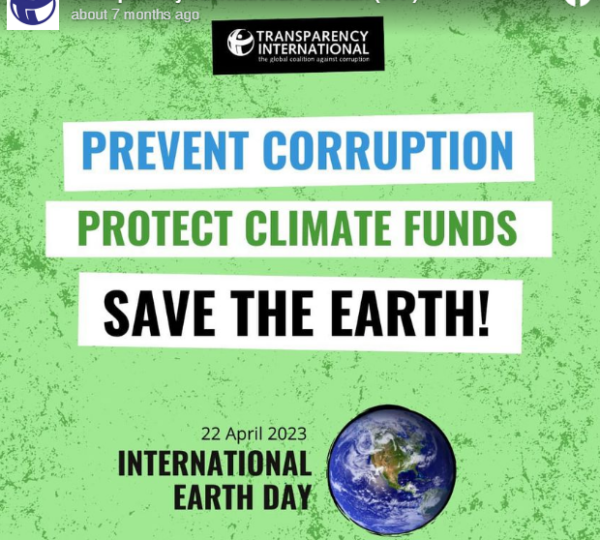
From our social media